Our 2 up 2 down London terrace: floor plans, dimensions and how we changed the layout
One of the questions I used to get asked most about our London house was how big it actually was. Small Victorian terraces can be surprisingly difficult to judge from photos alone, and because we changed the layout quite a lot during the renovation, the space ended up working very differently from when we first bought it.
So I thought it would be useful to share the original estate agent floor plan alongside the layout after our renovation, so you can see exactly how the house evolved.
For context, this was a two up two down Victorian terrace in Walthamstow, which we bought in February 2020 and lived in until late 2024.
The original layout when we bought the house
When we bought the house, the layout was fairly typical for a smaller Victorian terrace, but it had been altered over time in ways that didn’t necessarily make the most sense.
Downstairs was essentially one long open space, with very few internal walls. The only enclosed room on the ground floor was the bathroom. You entered straight into the front room, but from there the rest of the floor flowed through with no walls separating the spaces. The staircase also wasn’t boxed in, so you could walk directly underneath it.
At the back of the house there was a kitchen/dining area, which had been added as a full width extension around the bathroom by the previous owners.
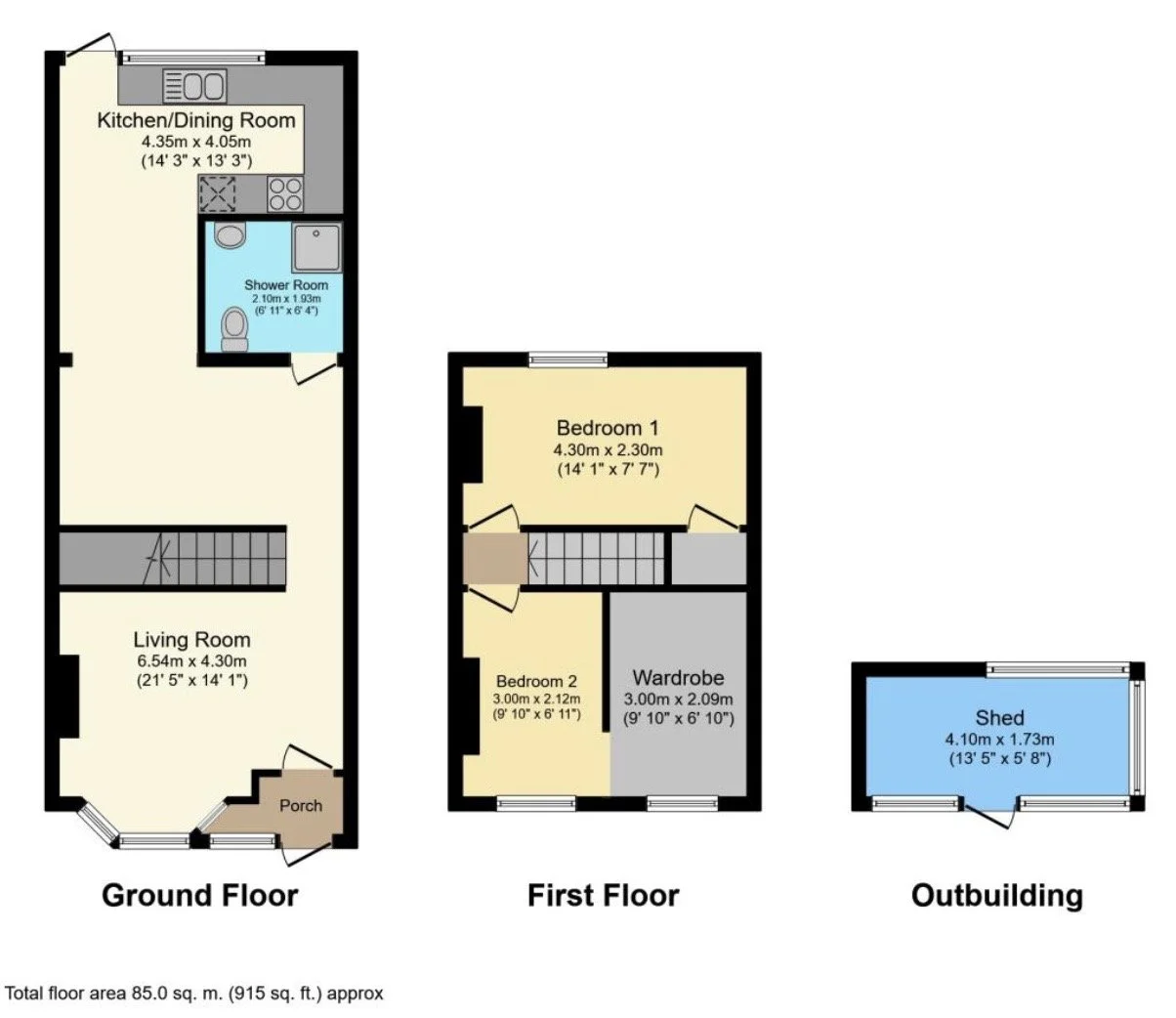
Upstairs, the original front bedroom had been split in two with a stud wall. This created a small bedroom at the front and another small room behind it which the estate agent listing called a wardrobe, but it was really just another room. The slightly strange part of this layout was that you had to walk through the small bedroom to access the second room, so it didn’t function particularly well as two separate spaces. On the other side of the tiny landing was the back bedroom.
Overall the house was listed with a total floor area of around 85 sq m (915 sq ft).
What we changed
The biggest transformation during the renovation was the layout.
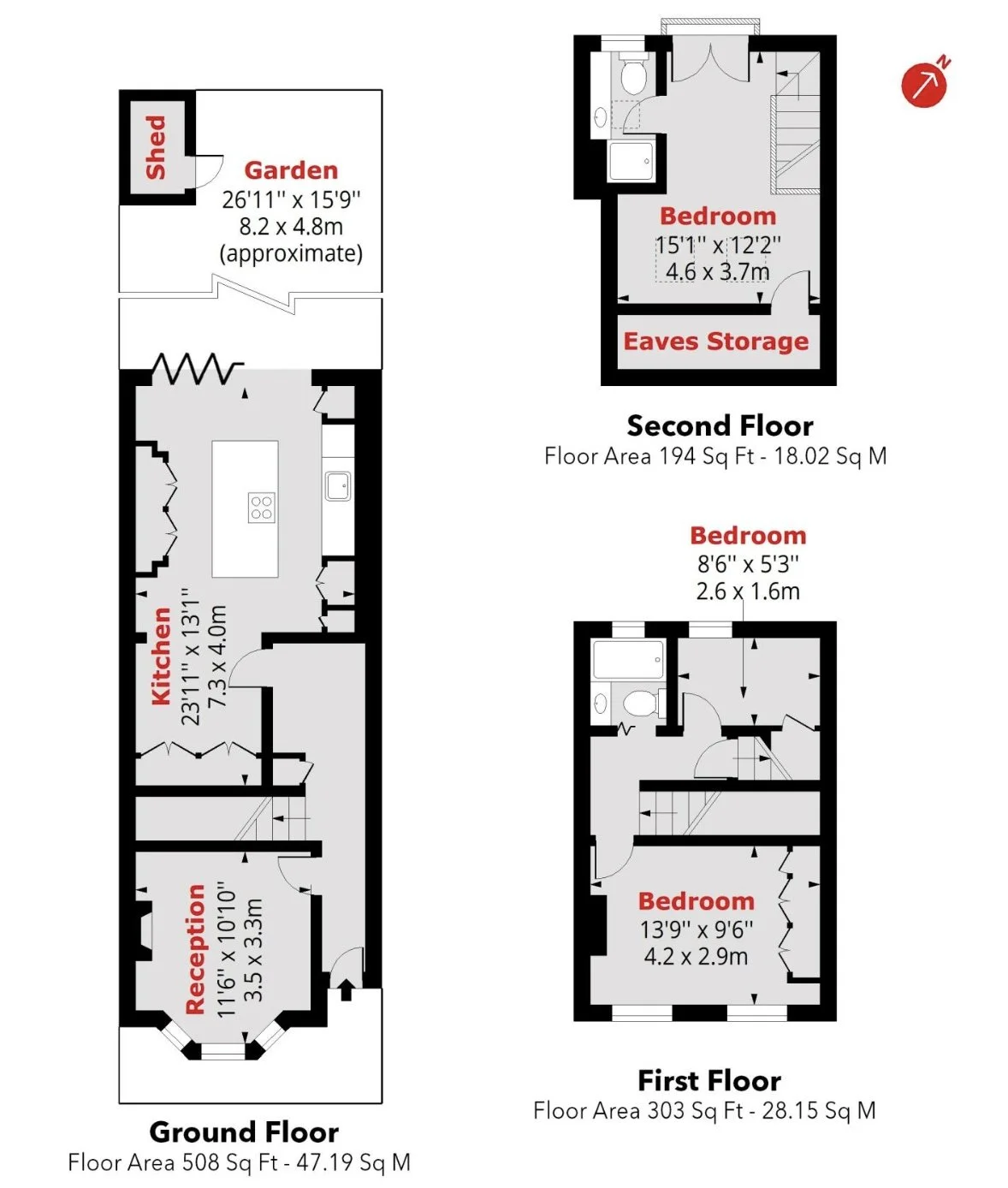
Creating proper rooms downstairs
Originally the ground floor was almost entirely open, with very little separation between spaces.
We added walls to create:
a hallway
a separate living room at the front
a more defined kitchen and snug area at the back
This alone made the house feel far calmer and more practical when you walked in.
Moving the bathroom upstairs
The original bathroom was downstairs, which meant we were constantly having to go down there to use it from the bedroom.
We reconfigured the back bedroom upstairs to create:
a family bathroom
a small third bedroom
a landing with stairs up to the loft
Removing the downstairs bathroom also allowed us to create a larger kitchen area.
Adding a loft conversion
The loft conversion added:
a third bedroom
an ensuite bathroom
eaves storage
This meant the house went from a slightly awkward two bedroom layout to a three bedroom, two bathroom home across three floors, and we increased the size to 93 sq m (1000 sq ft).
How the house felt in reality
On paper the house wasn’t huge, and the proportions were fairly modest compared to larger Victorian terraces. But once the layout worked properly, it felt like a completely different home.
Creating defined spaces downstairs, moving the bathroom upstairs, and using the loft space meant the house functioned far better day to day. In small houses like this, layout often makes a bigger difference than square footage.
What we learned renovating a small terrace
If you’re looking at renovating a house like this, my biggest takeaway is that layout changes can completely transform how a small house works.
Things like:
moving bathrooms to the right floor
creating proper circulation space
using loft space effectively
can make an enormous difference to the feeling of space in a two-up, two-down house like this.
What is a 2 up 2 down terrace?
A “two up two down” house is a traditional British terrace layout with two rooms downstairs and two bedrooms upstairs. They were commonly built during the Victorian and Edwardian periods, often as worker housing.
Many of these homes have since been extended or reconfigured to include loft conversions, additional bathrooms or larger kitchens, which can make the layout very different from the original floor plan.
If you’d like to follow along with the renovations in our new house in Newcastle, you can sign up to my email list below where I share updates, projects and behind the scenes from our latest DIYs.